China’s large-scale joint exercises around Taiwan entered their second day on Wednesday. The People’s Liberation Army (PLA) exercises began on Tuesday, involving its army, navy, air force, and rocket force. The exercises, described by Beijing as a warning against Taiwan’s “separatist forces,” have drawn reactions from the international community.
Taiwan’s Defense Ministry reported that on Tuesday, 71 Chinese military aircraft, 21 naval vessels, and four coast guard vessels intruded into waters near Taiwan’s outlying islands. China’s Shandong aircraft carrier was also positioned 220 nautical miles southeast of Taiwan. Additionally, a Chinese national was found attempting to illegally enter Taiwan via Kinmen on Tuesday. Taiwan’s coast guard warns that this could be a form of gray zone harassment.
Taiwan’s military has responded by closely monitoring movements, maintaining heightened alert levels, and deploying intelligence, surveillance, and reconnaissance measures to ensure national security.
The White House has condemned China’s actions. U.S. President Donald Trump reiterated the importance of Taiwan Strait peace and opposed any unilateral attempts to alter the status quo through force or coercion. A U.S. State Department spokesperson called China’s military pressure irresponsible and a direct threat to regional security.
The European Union also issued a statement condemning China’s use of force and coercion, urging all parties to maintain restraint and avoid actions that could cause further escalation.
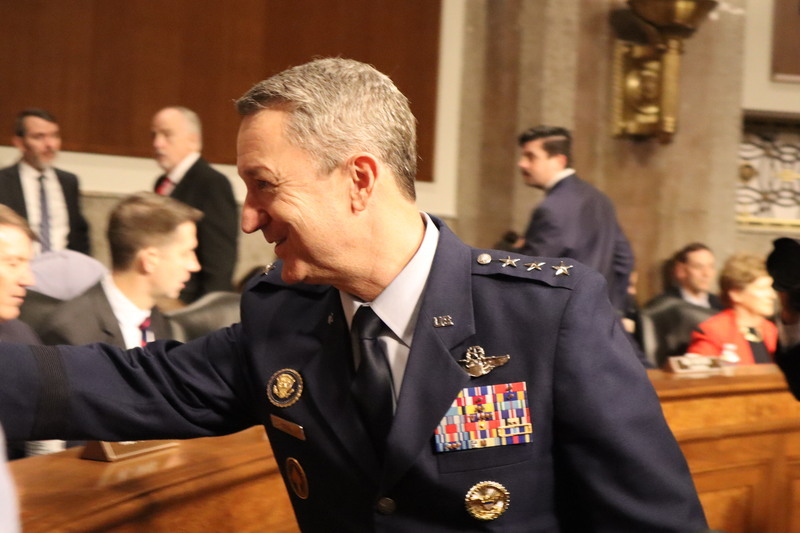
U.S. Chairman of the Joint Chiefs of Staff Lieutenant General Dan Caine on Tuesday made an assessment of the military balance between Taiwan and China. Caine says Taiwan’s defense capabilities are being outpaced by China’s rapid military modernization. He vowed to work closely with the Defense Secretary and the Commander of the U.S. Indo-Pacific Command to review Taiwan’s needs and capabilities and make recommendations accordingly.
Caine added that he will continue to support current U.S. efforts to enable Taiwan to maintain adequate self-defense capabilities. He also says that the U.S. will adjust strategic priorities and strengthen military alliances with Japan, Australia, and the U.K. to counter growing threats.