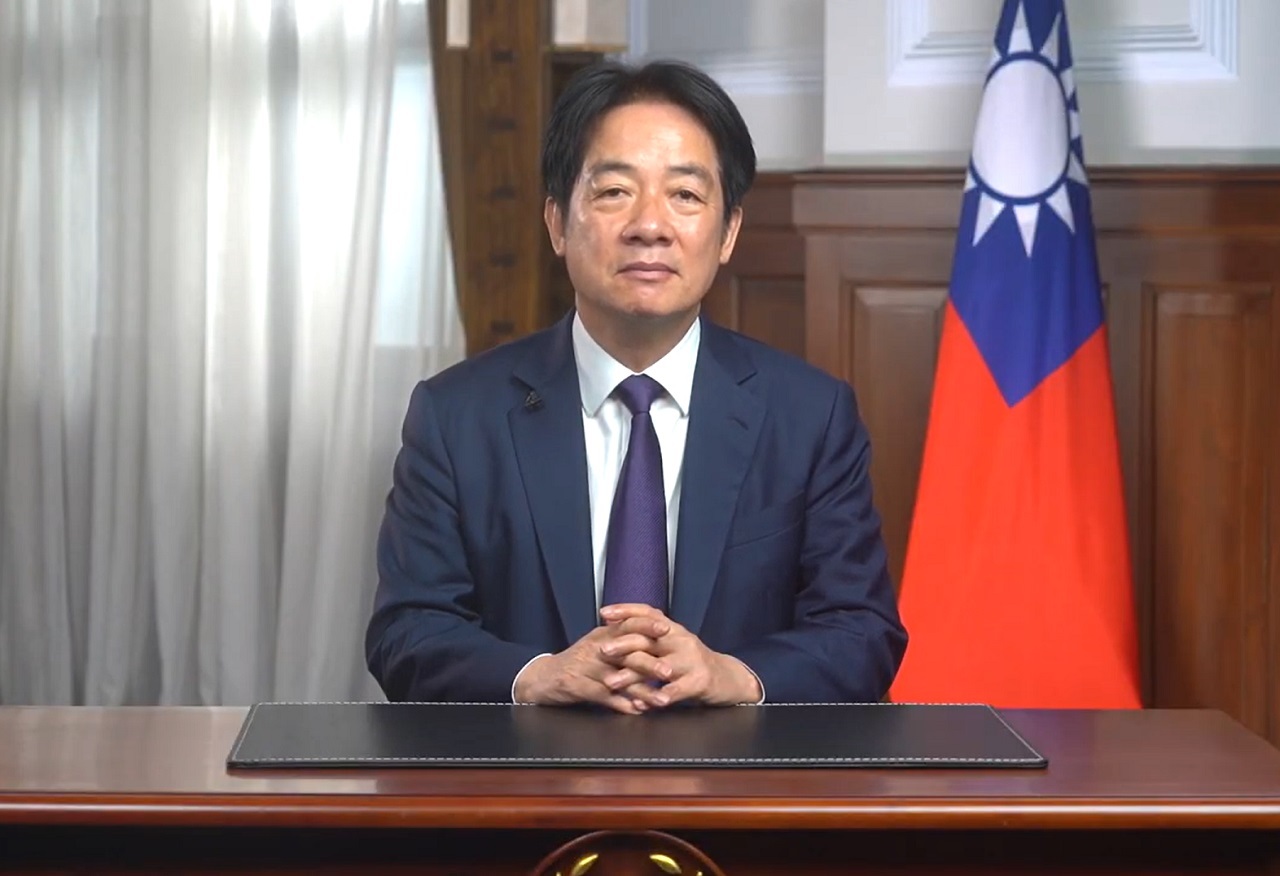
Taiwan does not plan to adopt retaliatory tariffs following the United States’ reciprocal tariffs but will adopt five strategies in response, as announced by President Lai Ching-te (賴清德) on Sunday.
The first strategy is improving reciprocal tariff rates through negotiations, which involves methods such as the formation of a negotiation team, expanding purchases from the U.S. to reduce the trade deficit, and eliminating non-tariff barriers to trade.
The second strategy focuses on providing support and assistance to the industries that will be affected, including micro-, small-, and medium-sized enterprises.
The third revolves around adopting new strategies for economic and industrial development to secure Taiwan’s sustainable and prosperous future. Lai says that Taiwan should make good use of the competitive advantages it possesses, such as in semiconductor manufacturing, integrated chip design, ICT, smart manufacturing, and more.
The fourth strategy involves the government incentivizing investments, carrying out deregulation, and continuing to improve Taiwan’s investment climate by actively resolving problems involving access to water, electricity, land, human resources, and professional talent.
The fifth strategy is to launch industry listening tours. Lai explains that administrative teams led by himself and Premier Cho Jung-tai (卓榮泰) will hear out industry concerns to resolve problems quickly and make sure policies meet actual needs.
On Monday, DPP spokesperson Han Ying (韓瑩) noted that Taiwan is bound to suffer the impact of the United State’s tariffs as they have been imposed on the whole world, but stressed that Taiwan’s economy is resilient, and that the impact can be minimized by appropriate strategizing between the public and private sectors.
KMT Legislative Caucus Convener Fu Kun-chi (傅崐萁) said the approximate NT$143.9 billion (US$4.4 billion) cut from the budget should serve as the basis for the revitalization plan. TPP Chairman Huang Kuo-chang (黃國昌) also agreed that the funds can be put to good use to expand assistance to industries and workers affected by the tariffs.