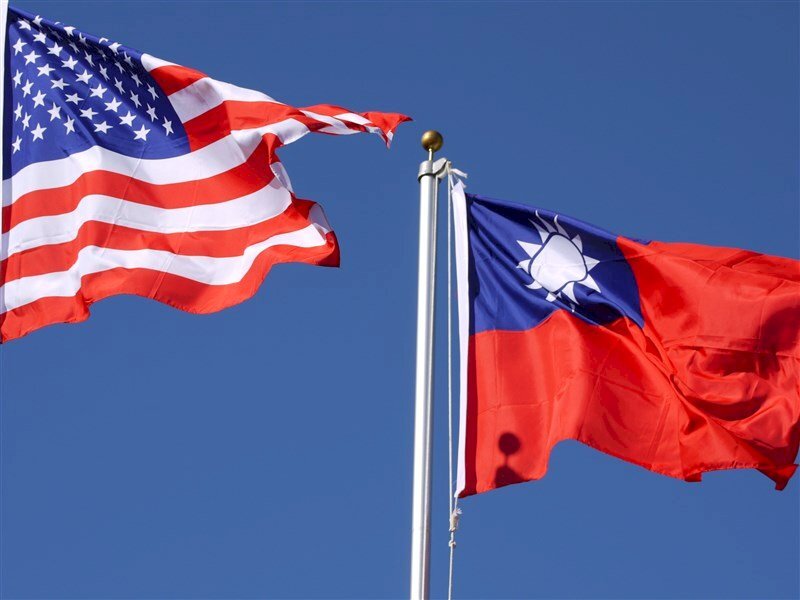
After the United States announced reciprocal tariffs including a 32% tariff on Taiwanese goods, President Lai Ching-te (賴清德) announced that Taiwan did not have plans to implement retaliatory tariffs. Chung-Hua’s Institution for Economic Research deputy director Wang Jiann-chyuan (王健全), and Dr. Sun Ming-te (孫明德) of the Taiwan Institute of Economic Research (TIER) explained the reasons behind Taiwan’s choice to not retaliate.
Wang first pointed out that Taiwan has a relatively small market when compared to the European Union or China, which would make it difficult to carry out reciprocal retaliation. Putting Taiwan’s population of 23 million into perspective he compared it to Mexico, who– even with a population of over 100 million– doesn’t dare retaliate.
When asked if the U.S. may concede should the Taiwanese government prevent TSMC from investing in the country, Wang responded by saying that Taiwan still relies on imports for raw materials and equipment. He pointed out that the U.S. has other measures in addition to tariffs it could apply, such as restricting supply to Taiwan through other allies.
TIER Business Development and Research Center Director Dr. Sun Ming-te also pointed out that the U.S. is not a manufacturing power, and retaliatory measures would depend on U.S. goods purchased by Taiwan. As that list currently includes American planes and cannons, Sun said retaliatory measures would not be feasible.
Wang said that speaking to substantive interests is more effective than talking about democracy and freedom when it comes to politicians like Donald Trump. He suggested purchasing American military and agricultural products to reduce the trade deficit, and establishing a complete supply chain through TSMC and UMC investments. Wang said Taiwan can become a valuable partner in U.S. reindustrialization, helping to establish manufacturing, create jobs, and provide technology and training.
Negotiations should start with zero tariffs and work downwards, according to Wang, who says Taiwan has some room for negotiation with its low industrial product tariffs.