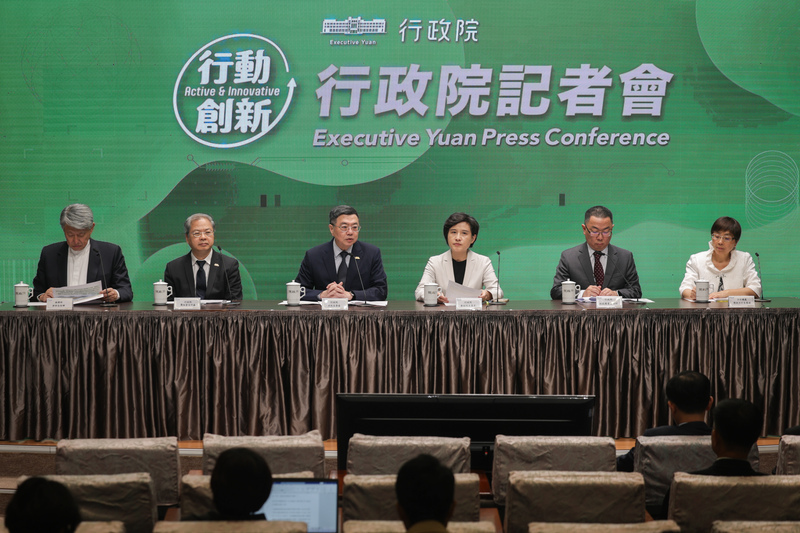
In response to U.S. President Donald Trump’s reciprocal tariff policy, Taiwan’s Cabinet on Thursday proposed a special budget bill totaling NT$410 billion (US$12.6 billion). Premier Cho Jung-tai (卓榮泰) stressed the government’s commitment to the “Made in Taiwan” principle, vowing not to allow Chinese-made goods to be rebranded as Taiwanese and asserting that industrial subsidies must not become bargaining chips in trade talks.
During Cho’s appearance before the Legislative Yuan on Friday, Taiwan People’s Party (TPP) lawmaker Vivian Huang (黃珊珊) warned that U.S. complaints over Taiwan’s food safety and agricultural policies could become leverage in tariff negotiations. She also questioned whether subsidies, a vital lifeline for domestic companies, might give Washington an excuse to demand concessions.
In response, Cho said the government would prioritize the health of the Taiwanese people and food safety while referencing international testing standards and scientific evidence in negotiations. He reiterated that subsidies would not be used as bargaining chips.
Separately, TPP legislator Huang Kuo-chang (黃國昌) raised concerns about a past scandal involving domestic solar firms rebranding China-made components as Taiwanese before exporting them to the United States. Cho responded firmly, pledging zero tolerance for “origin washing,” promising a full investigation, and vowing legal action or subsidy recovery if violations are found.