President Lai Ching-te (賴清德) affirmed that the National Health Insurance Administration’s per capita healthcare spending trial in Xiulin Township, Hualien County, was successful, and that the Health Ministry plans to expand the pilot program into more of the Hualien and Taitung area.
Taiwan currently employs a pay-per-volume healthcare system, also known as fee-for-service, where providers are reimbursed for each individual service they provide. A per capita healthcare payment system reserves a fixed amount for medical services per year for each person registered. Ideally, the fewer people requiring care, the more the budget is left unused, inspiring a strategy of preventive medicine and health promotion.
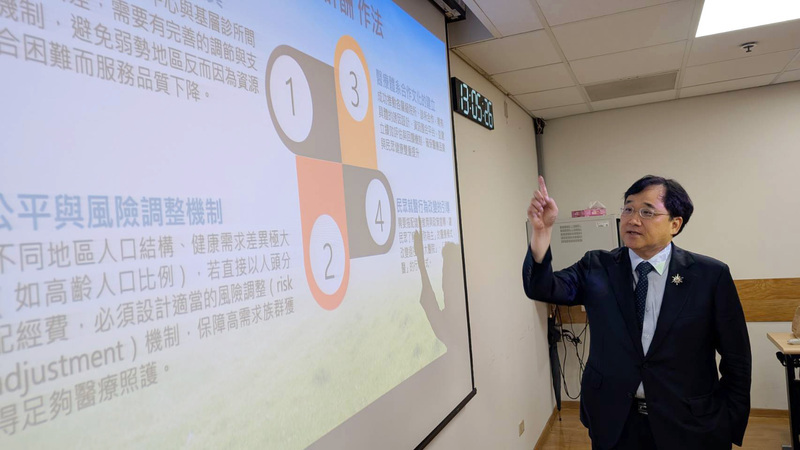
However, Taiwan College of Healthcare Executive President Hung Tzu-jen (洪子仁) said that a per capita system will restrict people's access to medical treatment. He pointed out that quality control must be established to monitor cure rates, treatment waiting time, and whether overall public health indicators have improved. Otherwise, Hung warns that there are risks, including scenarios such as medical institutions hindering medical treatment and delaying referral time to collect money, or small clinics shutting down due to lower payouts. Ideally, a per capita healthcare payment system could reduce unnecessary use of the government budget, but the transition must be undertaken with care.