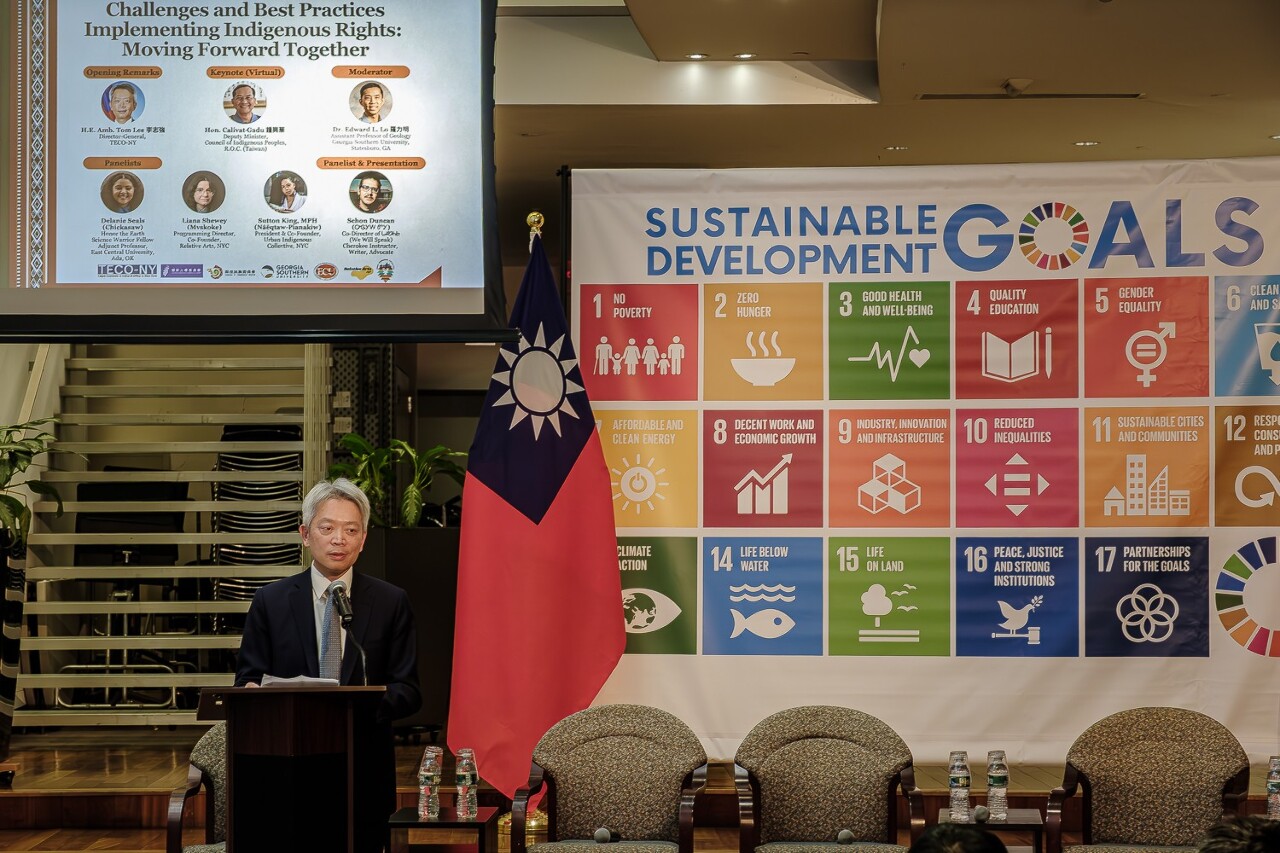
The 24th session of the United Nations Permanent Forum on Indigenous Issues (UNPFII) concluded on Friday, May 2nd. The seminal event convened Indigenous rights advocates, policymakers and academics from across seven socio-cultural regions, including Asia, for two weeks of discussion and debate. The central theme of the session was “Implementing the UN Declaration on the Rights of Indigenous Peoples within UN Member States and the UN system, including identifying good practices and addressing challenges”.
In conjunction with other UNPFII organized side events, the Taipei Economic and Cultural Office (TECO) held a related conference on implementing Indigenous peoples’ rights, identifying some challenges and best practices. The dialogue focused on diverse Indigenous communities in Taiwan and the United States and included a cross-section of presenters. For instance, Indigenous scholars reflected on how AI is impacting Indigenous peoples; promoted cultural practices and food sovereignty; and, addressed Indigenous peoples right to health and need for cultural safety.
At the UN, Indigenous leaders and activists highlighted the significant consequences of mining activities on local populations prompted by a surge in demand for various minerals as the renewable energy transition accelerates. Delegates emphasized equity, justice and the avoidance of repeating past mistakes as core principles in climate policies and actions. Furthermore, they expressed concern over the criminalization and suppression of Indigenous rights defenders as well as over the loss and damage caused to biodiversity, cultural heritage and other resources.
Permanent forum members also agreed on several outcomes. They authorized an expert group meeting on specific issues of the climate crisis, biodiversity governance and territorial integrity pertaining to nomadic and semi-nomadic peoples. In addition, they scheduled the 26th session of UNPFII to take place at UN Headquarters in New York from April 20th to May 1st, 2026. The proposed theme of that conference is “Ensuring Indigenous Peoples’ health, including in the context of conflict.”