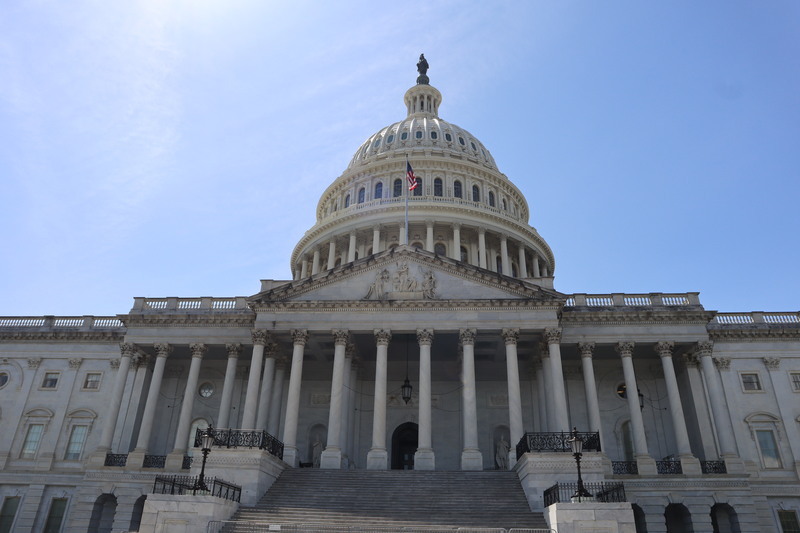
The U.S. House of Representatives on Monday unanimously passed the Taiwan Assurance Implementation Act, a bill aimed at deepening ties with Taiwan and removing outdated restrictions on official engagement. For the bill to become law, it must still pass the Senate in an identical form and be signed by the president.
The bill authorizes regular reviews and reports by the U.S. State Department on the self-imposed limitations that have long governed how officials interact with their Taiwanese counterparts. It also requires the department to lay out a plan for lifting those restrictions and builds on the 2020 Taiwan Assurance Act, which previously mandated a one-time review of the guidelines for interaction with Taiwan.
Since the U.S. cut formal diplomatic ties with Taiwan decades ago, the State Department has maintained a set of guidelines, often described as “red lines,” on interactions between U.S. and Taiwanese officials. In January 2021, then-Secretary of State Mike Pompeo announced the removal of self-imposed restrictions on Taiwan policy and the abolition of all guidelines for interactions with Taiwan. However, the Biden administration later restored the guidelines, but with some relaxed provisions allowing bilateral exchanges.
Current U.S. Secretary of State Marco Rubio has proposed several pro-Taiwan bills, and observers are closely watching whether the U.S. will fully abandon these self-imposed restrictions.
The act also encourages U.S. allies to push back against Beijing’s efforts to isolate Taiwan diplomatically. Prior to the vote, House Foreign Affairs Committee Chair Brian Mast voiced strong support, saying that if the U.S. wants to counter China’s ambitions for global dominance, it must show an unwavering commitment to Taiwan. He added that the new act ensures that the United States’ Taiwan policy aligns with today’s strategic reality.