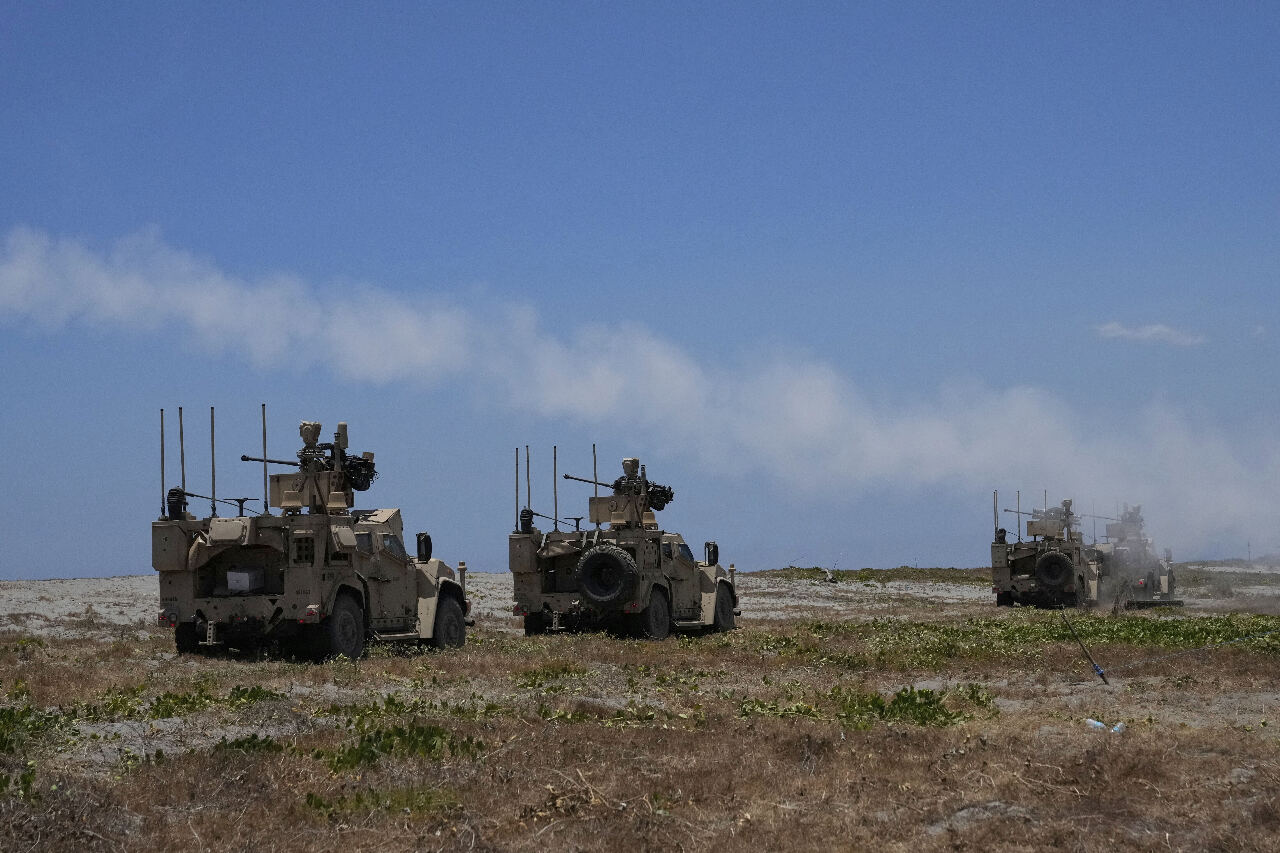
Experts believe that the ongoing joint military exercises between the United States and the Philippines is aimed not only at countering China’s expansion in the South China Sea, but also at enhancing deterrence against a potential Chinese invasion of Taiwan.
On Monday, the two countries launched their annual Kamandag (“Cooperation of the Warriors of the Sea”) exercise, which will run for two weeks until June 6. This year’s drills focus on maritime threats in the South China Sea and include the deployment of advanced weapon systems to the Philippines.
Among the newly deployed systems is the U.S. Navy-Marine Expeditionary Ship Interdiction System (NMESIS), a shore-based anti-ship missile platform. Institute for National Defense and Security Research Director Su Tzu-yun (蘇紫雲) noted that NMESIS can effectively target enemy fleets with its 185-kilometer range—enough to cover the Bashi Channel between northern Luzon and southern Taiwan. Paired with Taiwan’s own missile systems, it forms a crossfire zone capable of restricting Chinese naval movement.
Su also emphasized the Philippines' strategic position in the first island chain, serving as a key defense outpost against China’s “two oceans, three seas” strategy—aimed at securing maritime routes in the Pacific, Indian Ocean, East China Sea, Taiwan Strait, and South China Sea.
Su pointed out that China’s coercive actions against the Philippines over the past two years have triggered a domestic shift. Anti-China sentiment has grown, and overall, the pro-U.S. stance still enjoys broad public support.