China’s control over certain rare earth metals with applications in military technology is raising concerns over global security and highlighting the need for an alternative supply chain.
Video script:
The United States and its European allies are facing a major strategic challenge given China’s control over the rare earth metal samarium. The New York Times explains that samarium is widely used in rare earth magnets and in the manufacture of weapons such as fighter jets, missiles, and smart bombs, making it a critical component of military equipment; China’s control over samarium magnets exposes a major weakness in the U.S. military supply chain. Replenishing the recent large-scale depletion of military hardware stocks may prove challenging for the U.S. and Europe without the rare earth metal.
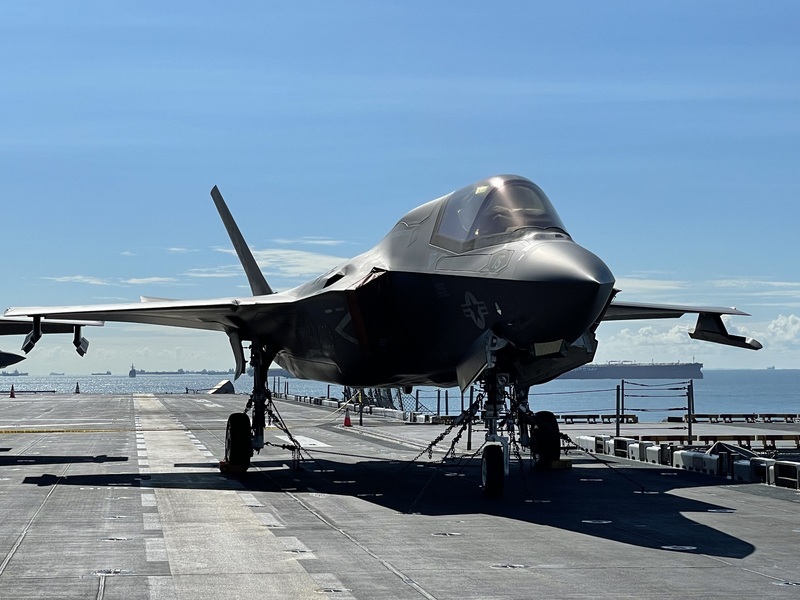
Samarium magnets are highly heat resistant, maintaining stable magnetism at temperatures high enough to melt lead, making them particularly suitable for the cramped spaces and high temperatures characteristic of equipment such as missile warheads and stealth fighters. Each U.S. F-35 stealth fighter requires at least 22.7 kilograms of samarium magnets. Russia’s invasion of Ukraine has caused increased consumption of Western military equipment, increasing the demand for samarium.
In response to the U.S. tariff war, China imposed export restrictions on seven types of rare earth metals and magnets in early April. They now require specially issued export licenses. Metallurgical expert from the Metropolitan State University of Denver Dr. Stanley Trout said that while most of the rare earth metals China has restricted from export have civilian applications, samarium is almost exclusively used for military purposes, and is crucial to the Western defense supply chain.
The U.S. government has long tried to establish an alternative supply of samarium with no success. Biden administration officials had issued contracts for the construction of two samarium metal processing plants, but neither were built due to concerns over commercial feasibility, and the U.S. has remained dependent on China for its samarium supply.
If a continuous supply of samarium magnets cannot be obtained, it will be difficult for the U.S. and NATO allies to rebuild the weapons that have been consumed during ongoing global conflicts. While restoring the supply of rare earth metals was a main topic of U.S.-China trade negotiations in London earlier this week, Western countries must diversify their rare earth metal supply chain if they wish to avoid bottlenecks and challenges to their strategic autonomy.
At this point, China’s control over rare earth minerals is no longer just a trade issue, but a global security issue. China’s export restrictions have served as a strong countermeasure against the tariffs and technological blockades launched by the Trump administration, showing that China is gradually strengthening its control over key resources.