The opposition Democratic Progressive Party (DPP) is calling on the ruling Kuomintang (KMT) to support its proposals for constitutional reform.
DPP proposals include lowering the voting age from 20 to 18, increasing the number of legislative seats from 113 to 158, and lowering the threshold required to pass constitutional amendments.
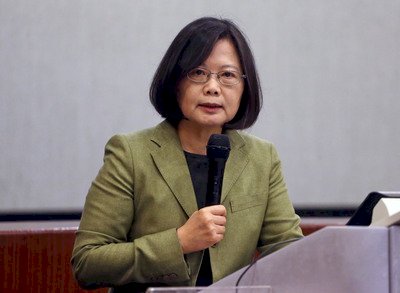
On Wednesday DPP chairwoman Tsai Ing-wen told the media that constitutional reforms will help consolidate democracy in Taiwan. But she also said that all parties and civic groups will need to work together to make reform possible.
"I hope the KMT will ditch the partisan ideology that it has been clinging to so that we can all sit down and talk. [We hope] constitutional reforms will have as much public support as possible," said Tsai.
Meanwhile, in response to Chinese President Xi Jinping’s recent comments on the importance of the so-called “1992 Consensus”, Tsai said that Taiwan is a democracy and the party that forms the government has the responsibility to maintain stable cross-strait relations.
The 1992 Consensus refers to a tacit understanding between Taiwan and China. It says that both sides agree that there is only “one China”, and both Mainland China and Taiwan are part of it. But the consensus allows for differing interpretations of what “one China” means. While the KMT has voiced its support for the 1992 Consensus, the DPP is wary of Beijing and its “One China Policy”.
Tsai is widely tipped as the DPP’s next presidential candidate, and observers rate her chances of winning the election favorably.