Three scientists have won the second Tang Prize in Biopharmaceutical Science for their development of CRISPR/Cas9. The selection committee called CRISPR/Cas9 “a breakthrough genome editing platform that promises to revolutionize biomedical research and disease treatment."
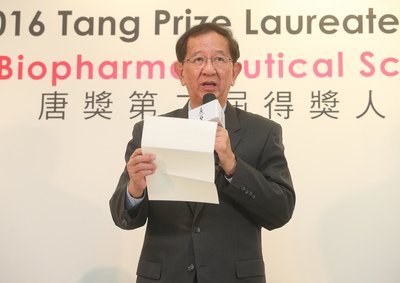
Taiwanese Nobel laureate Lee Yuan-tseh, who chairs the Tang Prize Selection Committee, made the announcement at a press conference in Taipei on Sunday.
One of the scientists acknowledged as a key inventor of CRISPR/Cas9 is French microbiologist Emmanuelle Charpentier. She is a world-leading expert in regulatory mechanisms underlying processes of infection and immunity in bacterial pathogens.
American geneticist Jennifer Doudna shares the prize for the innovation that could contribute to potential health breakthroughs.
The third awardee – Chinese-American scientist Feng Zhang – made his mark by showing how the technology could be adapted to deal with disease by applying it to edit animal genomes and getting it to work in human cells.
The laureates will share a cash prize of NT$40 million (US$1.24 million) and a research grant of up to NT$10 million (more than US$300,000) to be used within five years.
The Tang Prize, has been nicknamed “the Asian Nobel Prize”. It was founded by Taiwanese entrepreneur Samuel Yin to complement the Nobel and honor people who have made significant contributions in fields the Nobel doesn't cover – namely sustainable development, biopharmaceutical science, Sinology and rule of law. The selection committee is set to announce the winner of the Sinology award on Monday and the law award on Tuesday.
The first Tang Prizes were awarded in 2014.