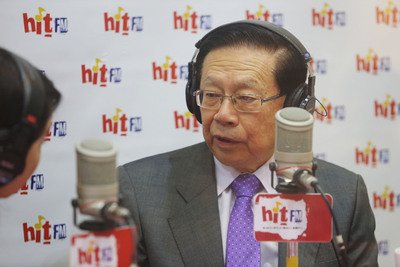
The incoming head of Taiwan’s Straits Exchange Foundation (SEF) -- Tien Hung-mao (田弘茂) -- says that Taiwan and China need to find an alternative way to solve the current cross-strait impasse.
In recent years, the so-called “1992 Consensus” has formed a basis for exchanges between the two sides. But on Monday, Tien said other options are needed. His comments came one week before he’s scheduled to take office as the head of the semi-official foundation, which handles relations with China in the absence of official exchanges.
The 1992 Consensus is a tacit agreement between Taiwan and China under which both recognized that they belong to one China. Each side reserved the right to interpret what “one China” means. President Tsai Ing-wen has not acknowledged the consensus since taking office in May.
Mainland China has cut off official communication with Taiwan and has limited its space in the international community as a way of pressuring the Tsai administration into acknowledging the agreement.
Tien said he hopes there can be other, friendlier ways to see the issue.
“We don’t know whether [acknowledging the 1992 Consensus] is the only path that Chinese leaders consider viable to solving the issue, or whether they believe there are other alternatives," said Tien.
"I hope there are other ways of expressing [the will to mend cross-strait relations], and that both sides can look at the issue in a friendlier, and more mutually-respectful manner,” he said.
Tien said he believes there is no room for cross-strait relations to get any worse. He said he hopes both sides can first collaborate on more pragmatic issues, such as fighting international fraudulent crimes.